

Shoulder replacement surgery can help relieve pain and restore shoulder function in patients with advanced joint damage. Two commonly used approaches are anatomic shoulder replacement and reverse shoulder replacement.
Although both procedures replace damaged parts of the shoulder joint, they use different implant configurations and rely on different shoulder structures to restore movement.
The main difference is that anatomic shoulder replacement preserves the natural ball-and-socket orientation of the shoulder, while reverse shoulder replacement switches the position of the ball and socket to allow the deltoid muscle to contribute more directly to arm elevation.
Anatomic vs. Reverse Shoulder Replacement: The Core Difference
Although both procedures are forms of shoulder arthroplasty, anatomic and reverse shoulder replacement use different implant geometries and rely on different biomechanical principles.
| Feature | Anatomic Shoulder Replacement | Reverse Shoulder
Replacement |
| Joint configuration | Preserves the natural anatomy | Reverses the normal ball-and-socket configuration |
| Main source of movement | Rotator cuff and deltoid | Primarily the deltoid |
| Rotator cuff requirement | Functional rotator cuff generally required | Can be used when the rotator cuff is deficient |
| Primary goal | Restore more physiological shoulder mechanics | Restore arm elevation when cuff function is insufficient |
| Typical applications | Glenohumeral osteoarthritis with an intact or functional rotator cuff | Cuff deficient shoulders, cuff tear arthropathy and selected complex cases |
| Rotation | May provide more physiological rotational movement | Rotation may be more dependent on implant design and remaining soft-tissue function |
| Important complications | Rotator cuff failure glenoid loosening instability, infection | Instability loosening, infection periprosthetic fracture, scapular notching |
Neither procedure is universally superior. Implant selection should be based on the patient’s anatomy, pathology, rotator cuff status, functional requirements, and other clinical factors.
How Does Anatomic Shoulder Replacement Work?
Anatomic shoulder replacement is designed to reproduce the natural configuration of the shoulder joint. In a typical procedure, the damaged humeral head is replaced with a prosthetic humeral component, while the damaged glenoid surface may be replaced with a glenoid component.

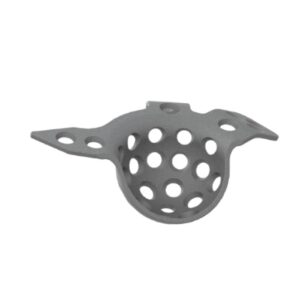
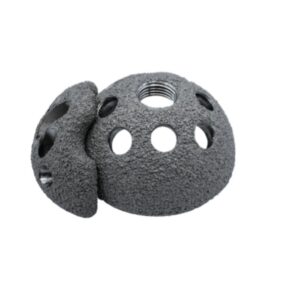
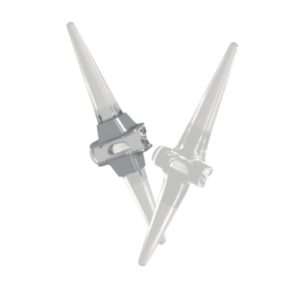
Orthogonal/Half Shoulder Product Series Features
The prosthesis maintains the natural relationship between the humeral ball and the glenoid socket. Because the reconstruction relies on the native biomechanics of the shoulder, a functioning rotator cuff is an important consideration. The rotator cuff helps stabilize the joint and works together with the deltoid to produce controlled shoulder movement. Anatomic shoulder replacement may therefore be considered for patients with conditions such as primary glenohumeral osteoarthritis when the rotator cuff remains fuctional.

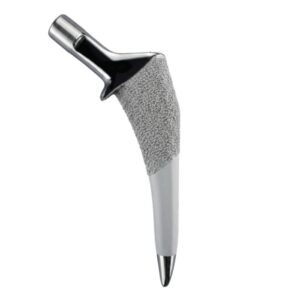
Product Features of Cemented Humeral Stem
How Does Reverse Shoulder Replacement Work?
Reverse shoulder replacement uses a different implant configuration.
Instead of maintaining the natural anatomy, the procedure places a glenoid-sided ball and a humeral-sided socket. This changes the center of rotation and mechanical environment of the shoulder.
The altered biomechanics allow the deltoid muscle to contribute more substantially to arm elevation, reducing the dependence on an intact rotator cuff.
This makes reverse shoulder replacement particularly useful in selected patients with severe rotator cuff deficiency, cuff tear arthropathy, or certain complex shoulder conditions.
However, reverse shoulder replacement is not simply an alternative version of anatomic replacement. It is designed around a different biomechanical strategy, and patient selection remains essential.

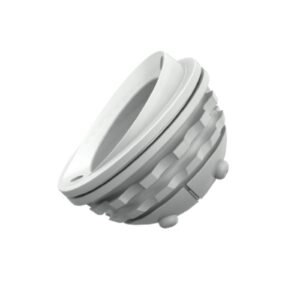
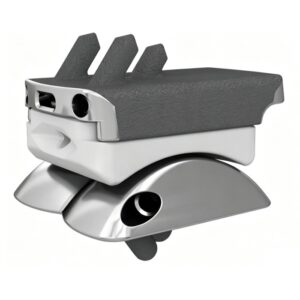
Feature of Reverse Shoulder Product Series
When Is Anatomic Shoulder Replacement Considered?
Anatomic shoulder replacement may be considered when the shoulder joint is significantly damaged, but the rotator cuff is sufficiently functional.
Common clinical considerations include:
- Primary glenohumeral osteoarthritis
- Pain and functional limitations that have not responded adequately to conservative treatment.
- Preserved or repairable rotator cuff function
- Appropriate glenoid and humeral bone anatomy
- Patients who may benefit from restoration of more physiological shoulder mechanics.
The final choice depends on the individual patient’s clinical and radiographic findings.
When Is Reverse Shoulder Replacement Considered?
Reverse shoulder replacement may be considered when the rotator cuff cannot provide adequate function for an anatomic reconstruction.
Potential indications include:
- Cuff tear arthropathy
- Severe or irreparable rotator cuff deficiency
- Selected complex proximal humeral fractures.
- Certain revision shoulder arthroplasty procedures
- Other conditions in which restoration of shoulder elevation would be difficult with an anatomic configuration.
Reverse shoulder arthroplasty can be particularly valuable when the deltoid remains functional because the procedure changes the shoulder’s biomechanics to make greater use of the deltoid for elevation.
Outcomes and Functional Differences
Clinical outcomes following either procedure depend on multiple factors, including diagnosis, rotator cuff status, implant design, surgical technique, rehabilitation, and patient characteristics.
- Range of Motion
Anatomic shoulder replacement can provide more physiological shoulder mechanics when the rotator cuff remains functional. Rotational movement, including external rotation, may be an important consideration for patients whose activities require substantial shoulder rotation.
Reverse shoulder replacement is primarily designed to restore functional arm elevation in patients with deficient rotator cuff function. Improvements in forward elevation can be substantial, although postoperative rotation can vary depending on implant design, remaining soft-tissue function, and rehabilitation.
- Strength
Reverse shoulder arthroplasty changes the mechanical environment of the shoulder and allows the deltoid to contribute more directly to arm elevation.
Anatomic shoulder replacement relies more heavily on coordinated rotator cuff and deltoid function.
Therefore, the expected functional benefit should be considered in relation to the patient’s preoperative muscle function rather than the implant configuration alone.
- Patient-Reported Outcomes
Both anatomic and reverse shoulder replacement can improve pain, shoulder function, and patient-reported outcomes in appropriately selected patients.
Comparative studies suggest that outcomes can overlap substantially in some patient populations, while differences may be observed in areas such as rotational motion, complications, and revision risk.
For this reason, the question is generally not which implant is universally better, but which configuration is more appropriate for the patient’s underlying shoulder condition.
Potential Complications of Anatomic Shoulder Replacement?
Potential complications include:
- Rotator cuff dysfunction or failure
- Glenoid component loosening
- Instability
- Infection
- Periprosthetic fracture
- Implant wear or failure.
Postoperative rotator cuff dysfunction can be particularly important because an anatomic reconstruction depends on adequate cuff function for shoulder stability and movement.
Potential Complications of Reverse Shoulder Replacement?
Potential complications include:
- Instability or dislocation
- Infection
- Glenoid or humeral component loosening
- Periprosthetic fracture
- Scapular notching
- Acromial or scapular spine stress-related fractures
- Implant-related failure
The frequency and clinical significance of these complications can vary according to patient factors, implant design, surgical technique, and follow-up duration.
Revision Considerations
Revision surgery is an important factor when evaluating anatomic and reverse shoulder replacement.
Anatomic shoulder replacement may require revision because of rotator cuff failure, glenoid component loosening, instability, infection, or other implant-related complications.
Rotator cuff deterioration is particularly relevant because progressive cuff dysfunction can compromise the biomechanics of an initially successful anatomic reconstruction.
Reverse shoulder replacement also has potential revision-related complications, including instability, infection, component loosening, periprosthetic fracture, and other implant failures.
When an anatomic shoulder replacement fails because of significant rotator cuff deficiency, conversion to a reverse shoulder arthroplasty may be considered in selected patients. However, revision shoulder arthroplasty is generally more complex than primary surgery and may have different functional outcomes.
Recent comparative research has increasingly evaluated revision rates, complications, range of motion, and patient-reported outcomes between anatomic and reverse shoulder arthroplasty. These findings reinforce the importance of considering both current clinical needs and potential future revision requirements when selecting an implant configuration.
Which Is Better: Anatomic or Reverse Shoulder Replacement?
There is no single answer that applies to every patient.
Anatomic shoulder replacement may be more appropriate when the rotator cuff is functional, and preservation of more physiological shoulder mechanics is a priority.
Reverse shoulder replacement may be more appropriate when rotator cuff function is severely deficient and restoring arm elevation through the deltoid is a primary objective.
The decision should consider:
- Rotator cuff integrity
- Diagnosis and severity of joint damage
- Glenoid and humeral bone quality
- Patient age and activity level
- Desired functional outcomes
- Previous shoulder surgery
- Potential need for future revision
The goal is not simply to choose between two implant types, but to select the configuration that best matches the patient’s anatomy and functional requirements.
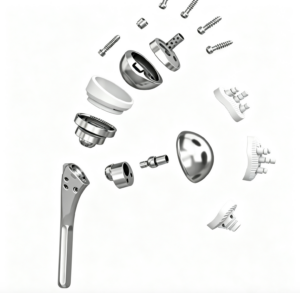
Angel Shoulder Replacement System
The Angel Shoulder Replacement System is designed to support different shoulder arthroplasty configurations and clinical requirements.
Its design incorporates options for both anatomic and reverse shoulder arthroplasty, providing surgeons with flexibility when selecting an appropriate reconstruction strategy.
The system is intended to support anatomical restoration while also providing options for cases where a reverse configuration is clinically appropriate.
For detailed information about the implant components, surgical instruments, and available configurations, please refer to the product information provided by Double Medical.
Conclusion
Anatomic and reverse shoulder replacement use different biomechanical strategies to restore shoulder function. In additional, the anatomic shoulder replacement preserves the natural ball-and-socket orientation and generally depends on adequate rotator cuff function. Reverse shoulder replacement changes the joint configuration and allows the deltoid to play a greater role in arm elevation, making it useful for selected patients with rotator cuff deficiency. The best choice depends on the patient’s pathology, anatomy, rotator cuff status, functional requirements, and potential revision considerations.
Understanding these differences can help surgeons and healthcare professionals evaluate the most appropriate shoulder arthroplasty configuration for individual clinical needs.
Frequently Asked Questions (FAQs)
What is the main difference between anatomic and reverse shoulder replacement?
Anatomic replacement preserves the natural joint configuration, while reverse replacement switches the ball and socket to increase the deltoid’s role in shoulder elevation.
Which shoulder replacement is better?
Neither is universally better. The appropriate procedure depends on rotator cuff function, diagnosis, anatomy, patient factors, and the desired functional outcome.
Can you have a reverse shoulder replacement with a torn rotator cuff?
Yes. Reverse shoulder replacement is often considered when significant rotator cuff deficiency makes an anatomic reconstruction less suitable.
Does anatomic shoulder replacement provide better rotation?
Anatomic replacement can provide more physiological rotational mechanics when the rotator cuff is functional, although outcomes vary between patients.
Is reverse shoulder replacement used for rotator cuff problems?
Yes. Reverse shoulder arthroplasty can be used for selected patients with severe or irreparable rotator cuff deficiency, including cuff tear arthropathy.
Can an anatomic shoulder replacement be revised to a reverse replacement?
Yes. In selected failed anatomic shoulder replacements, conversion to a reverse shoulder arthroplasty may be considered, depending on the cause of failure and the patient’s anatomy.